Be₃Al₂Si₆O₁₈
Beryl
Beryllium, aluminium, silicon and oxygen form beryl.

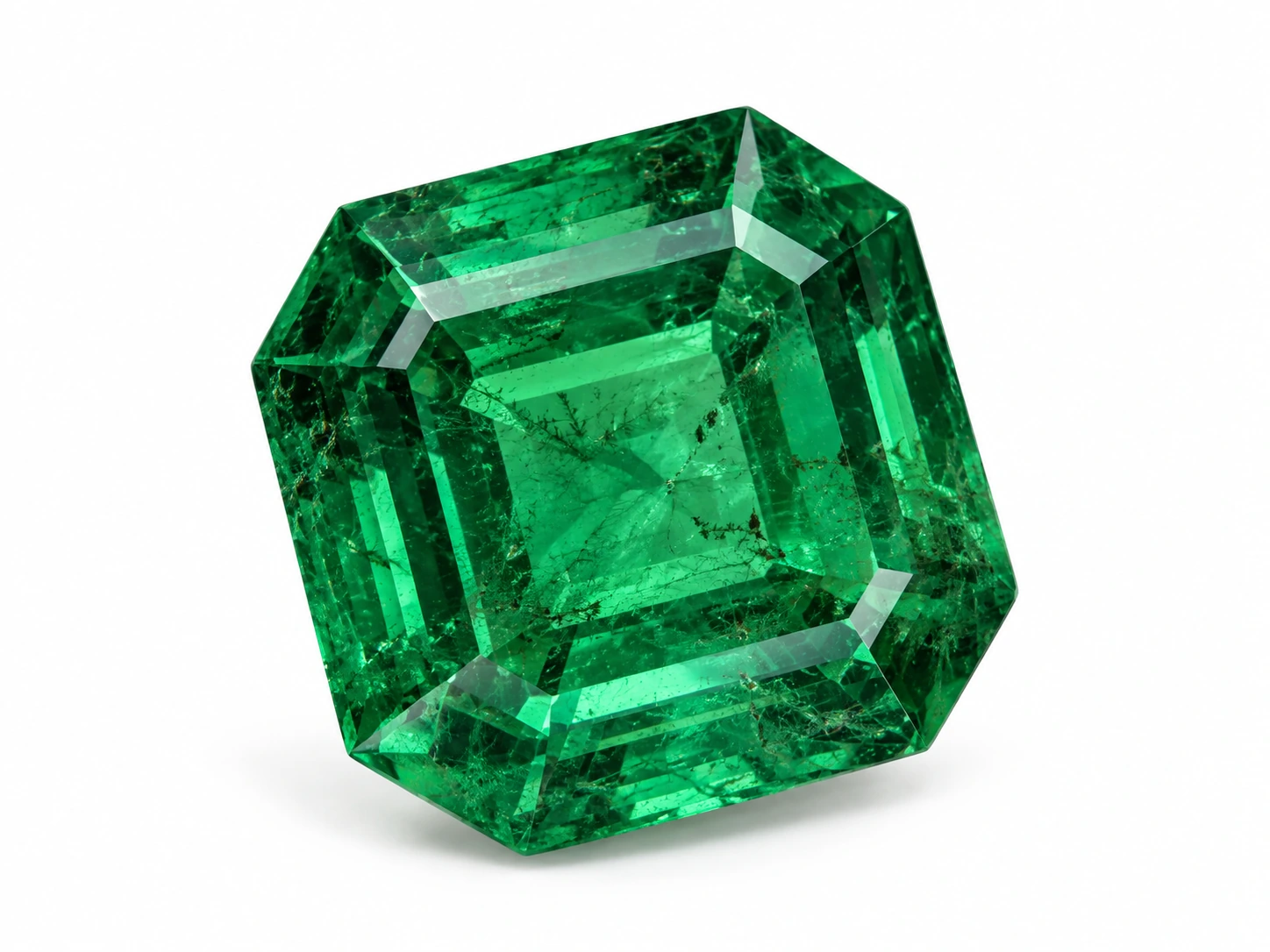
Emerald is the green variety of beryl. Its colour ranges from bluish green to green, with subtle shifts in tone and saturation giving each stone a distinct presence.
Within emerald, fine inclusions are often described as a jardin: a garden. These details, together with colour and cut, help define its individual character.
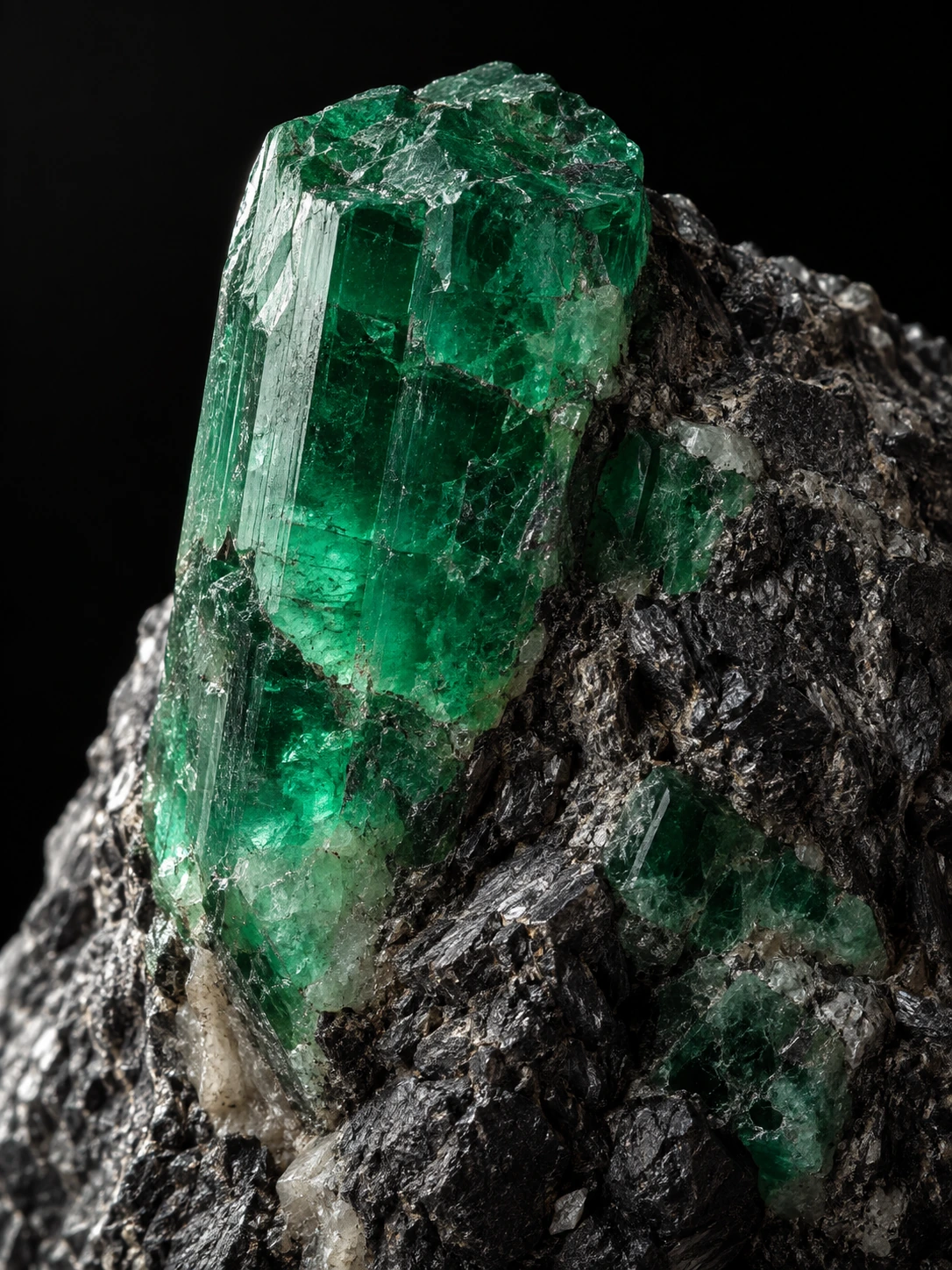
Beryllium, aluminium, silicon and oxygen form beryl.
Trace chromium or vanadium can contribute green colour.
When the green meets emerald’s colour range, beryl becomes emerald.
Emeralds often contain fluid inclusions, mineral crystals and natural fissures. These features affect appearance and can provide useful information during gemmological examination.
Client-supplied footage of the gemstone. Internal features require individual examination.Look at green hue, depth of tone and saturation. The most appealing colour is best judged in a range of ordinary lighting.
Look closely at internal features and ask how any inclusions or treatments affect appearance and care.
Proportion, symmetry and polish influence how light moves through a stone and how its colour appears.
A closer look
A closer look
A closer look
A closer look
Explore the gemstone from different perspectives. Enquire for current availability and details of each offering.
01Emerald belongs to the beryl mineral family.
02Chromium and vanadium contribute green colour.
03Emerald measures 7.5–8 on the Mohs scale.
04Its inclusions are sometimes called a jardin.
05Fracture filling should be disclosed to the buyer.
06Inclusions mean emerald needs thoughtful care.
07The emerald cut can help protect vulnerable corners.
08Origin and treatment details belong in the conversation.
Colombia, Zambia, Brazil and Afghanistan are among the countries associated with emerald. Origin should be documented for each individual stone.
Explore origin & documentation