Al₂O₃
Corundum
Aluminium and oxygen form the mineral corundum.

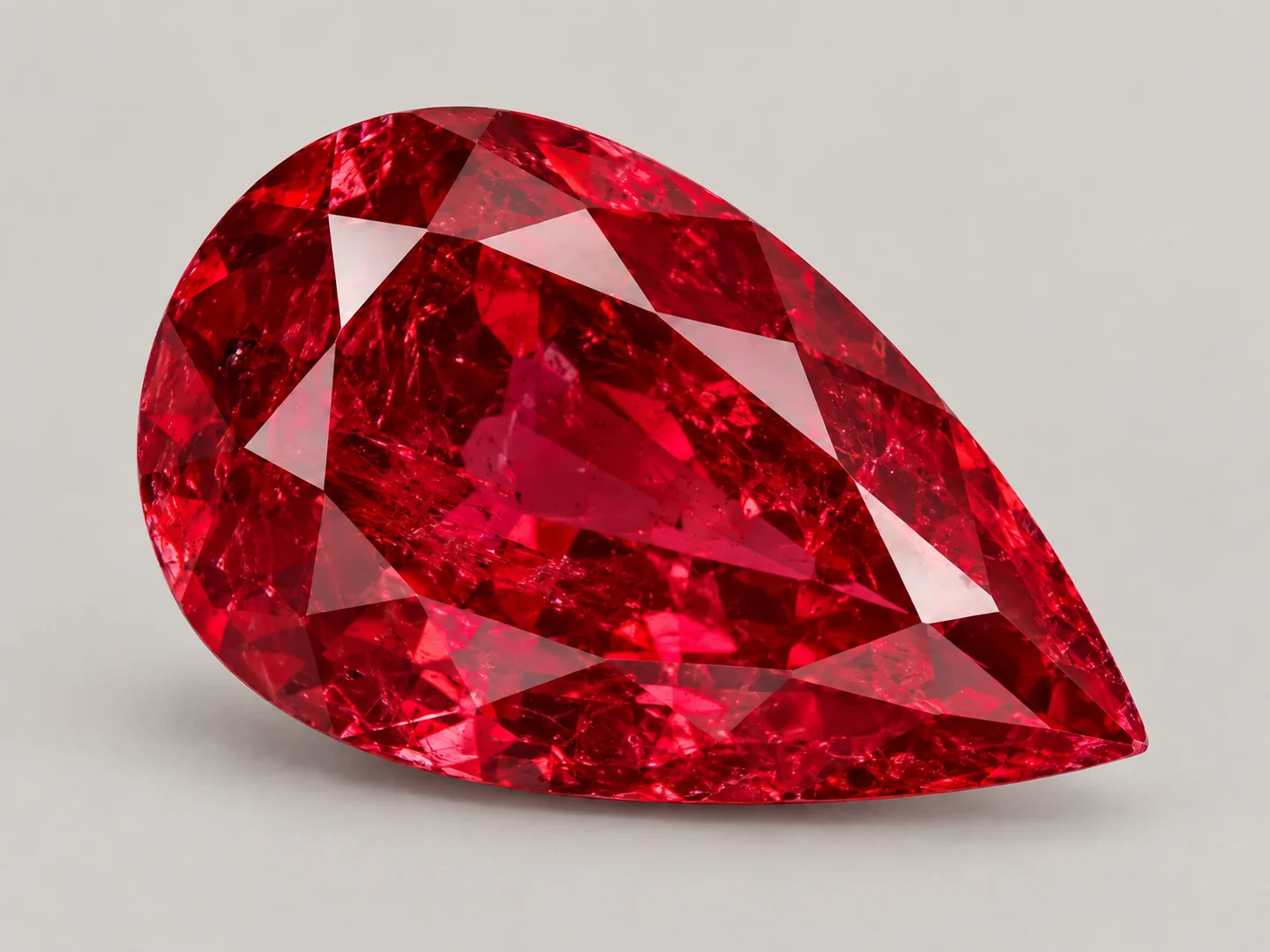
Ruby is the red variety of corundum. From a soft pinkish red to a rich, saturated crimson, its colour is shaped by trace amounts of chromium within the crystal.
A raw ruby shows its natural crystal surfaces and mineral companions. A refined ruby offers another perspective: a considered arrangement of facets that reveals colour and light.
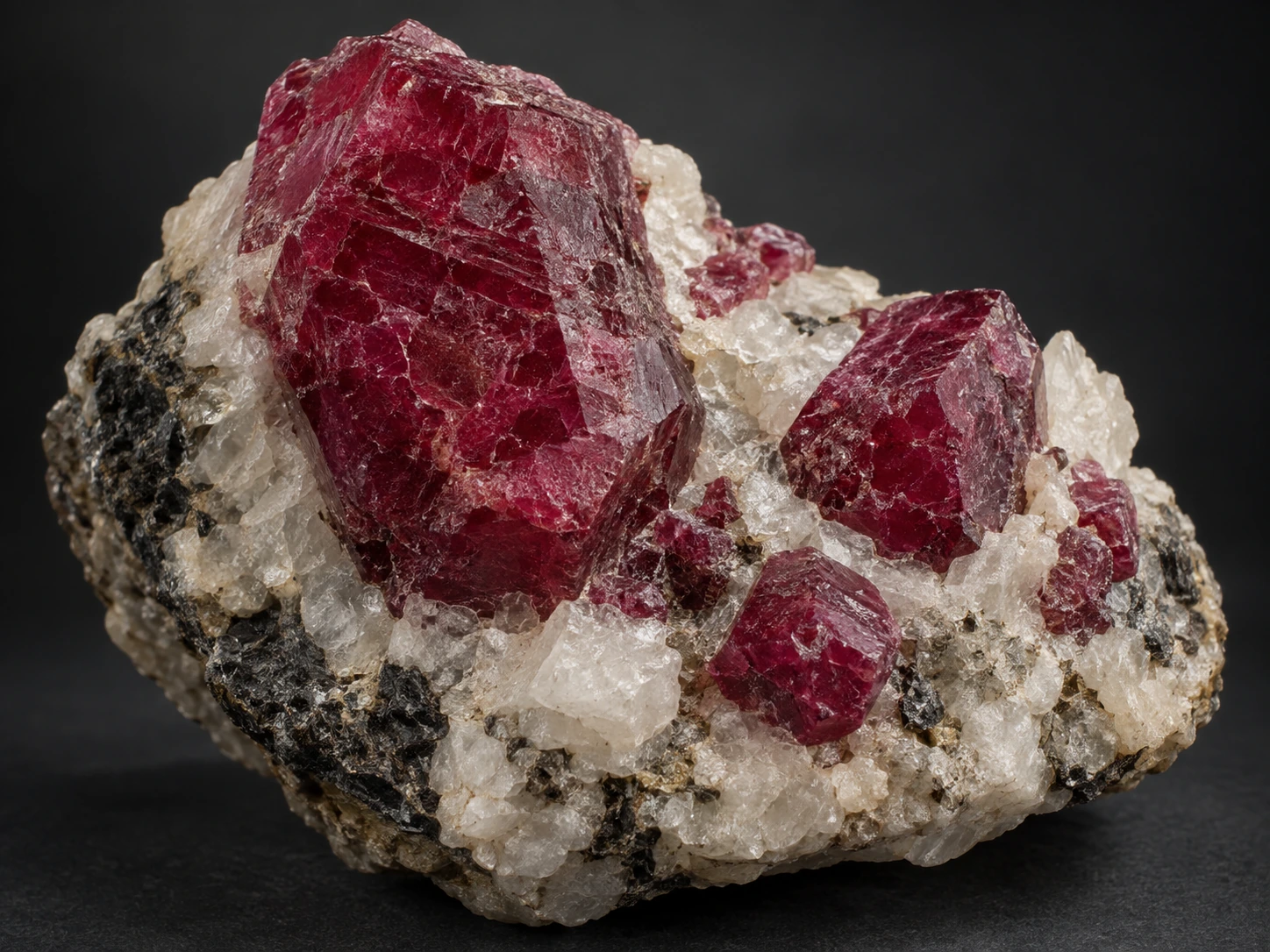
Aluminium and oxygen form the mineral corundum.
Trace chromium can replace some aluminium in the crystal structure.
The result is the red variety of corundum known as ruby.
Fine needles, mineral crystals and growth features can be part of a ruby’s interior. Gemmologists study them alongside other tests when identifying natural origin and treatments.
Client-supplied footage of the gemstone. Internal features require individual examination.Purplish red, pure red and orangy red each have their own expression. Assess hue, tone and saturation together.
Look closely at internal features and ask how any inclusions or treatments affect appearance and care.
Proportion, symmetry and polish influence how light moves through a stone and how its colour appears.
A closer look
A closer look
A closer look
A closer look
Explore the gemstone from different perspectives. Enquire for current availability and details of each offering.
01Ruby and sapphire share the same mineral family.
02Chromium is responsible for ruby’s red colour.
03Ruby measures 9 on the Mohs hardness scale.
04Inclusions can offer clues to a stone’s history.
05Heat treatment is common and should be disclosed.
06Colour can look different under different lighting.
07A carat is a measure of weight, not size.
08An independent report helps support informed decisions.
Mozambique, Myanmar, Sri Lanka and Madagascar are among the places associated with ruby. A particular stone’s geographic origin requires supporting evidence.
Explore origin & documentation